
Spend enough time around barbecue and you’ll quickly discover there’s a language all of its own. Low and slow, hot and fast, offsets, kettles, barrels, bark, the stall… if you’re new to it, it can leave you wondering what the hell everyone is talking about.
The good news? Most barbecue jargon is pretty straight-forward. Learn the basics and it all starts to make sense.
Here are ten terms worth knowing before you fire up the smoker.
#1 Low And Slow
The foundation of traditional barbecue. Low and slow means cooking indirectly, away from direct heat, at a relatively low temperature for a long time.
Target pit temperature is generally around 107–135°C (225–275°F). The aim is to gently break down tough connective tissue while building flavour.
You’re not cooking it until it’s done — you’re cookin it until it’s good.
#2 Hot And Fast (Indirect)
Same principle, just with the vents wide open and plenty of lit fuel. Still indirect cooking, but at a higher temperature, significantly reducing cooking time.
A good target is around 135–205°C (275–400°F).
A word to the wise, increase the heat as your confidence grows. Don’t jump straight to the upper limits; burning things is very much a thing and expensive.
#3 Lump Vs Briquettes
For traditional barbecue, it is all about charcoal and wood-fired cooking.
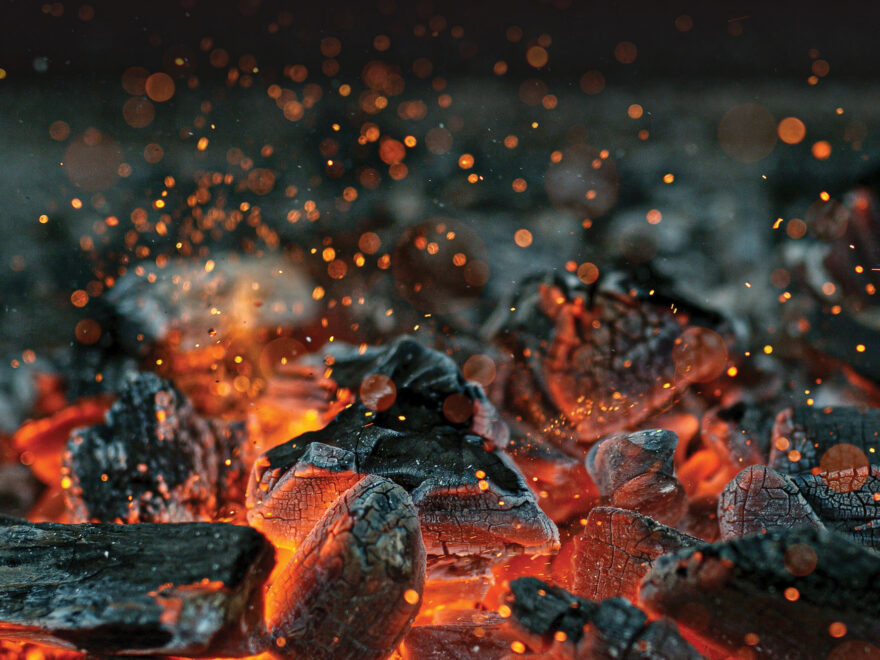
Lump charcoal is carbonised hardwood. It lights quickly, burns hot and gives plenty of control, but piece size varies.
Briquettes are manufactured charcoal pressed into uniform shapes. They burn more consistently and for longer, making them useful when you need steady heat for hours.
Neither is automatically better. They’re different tools for the job and can be mixed to suit.
#4 Offset, Kettle & Barrel Smokers
An offset smoker has a separate firebox, with heat and smoke travelling into the cooking chamber.
A kettle is the familiar round charcoal barbecue, easily set up for indirect cooking.
A barrel smoker uses a barrel-shaped cooking chamber, with the heat source generally below or to one side. Many options like Pit Barrel Cookers allow you to hang meat from hooks rather than laying it on racks, making better use of your cooking real estate.
#5 The Stall
One of the more frustrating parts of low and slow in my opinion.
Usually occurring around 65–74°C (150–165°F) internal temperature, the meat can appear to stop cooking as moisture evaporates from the surface and cools the meat.
It can sit there for hours, making you question every life decision that led you to barbecue.
This is one advantage of hot and fast, higher pit temperatures can significantly reduce or effectively bypass the stall.
#6 Bark
That dark, crusty, intensely flavoured exterior that develops during barbecue.
Smoke, seasoning, heat and the Maillard reaction all play a part.
Good bark is barbecue gold.
#7 The Wrap Phase
Once the bark has set, you’ve got three common options to finish the barbecue to tender: butcher paper, foil or the boating method.
Butcher paper protects the meat while allowing some moisture to escape. Foil creates a tighter seal, trapping moisture and heat and speeding things along.
The boating method is particularly useful when running hot and fast. Once the bark has set, place the meat in a sturdy oven tray with a few millimetres of liquid – a BBQ sauce, 50g of butter with a beef broth or dark beer for beef or zero-sugar cola for pork all work well. Cover tightly with quality tin foil.
Here’s where you can unlock the cheat code: put it in the oven at 200°C (392°F).
Once wrapped, the charcoal and smoke have done their job. There’s little point burning expensive charcoal just to generate heat when the oven can do it perfectly well.
Cook until probe tender, then vent the foil to release the steam and let the bark firm back up before resting.
#8 Probe Tender
Forget blindly cooking to a particular temperature.
Probe tender means your thermometer or skewer slides into the meat with very little resistance, like pushing it into soft butter. That’s the ultimate goal, whatever the cut.
#9 The Smoke Ring
That pinkish-red band just beneath the surface of smoked meat, formed through chemical reactions involving smoke and the meat’s myoglobin.
Contrary to popular belief, a smoke ring isn’t a reliable measure of flavour or whether your barbecue is actually good, but it certainly appeals to the eyes, and that matters.
#10 Rest
Once the meat is probe tender, don’t slice it straight away.
Resting allows the temperature to settle and gives the meat time to redistribute and retain its juices.
The bigger the piece of meat, the more important this becomes.
And that’s the basics. Learn the jargon, understand what’s happening inside the cooker, and you’ll have a much better idea of what your barbecue is actually doing.